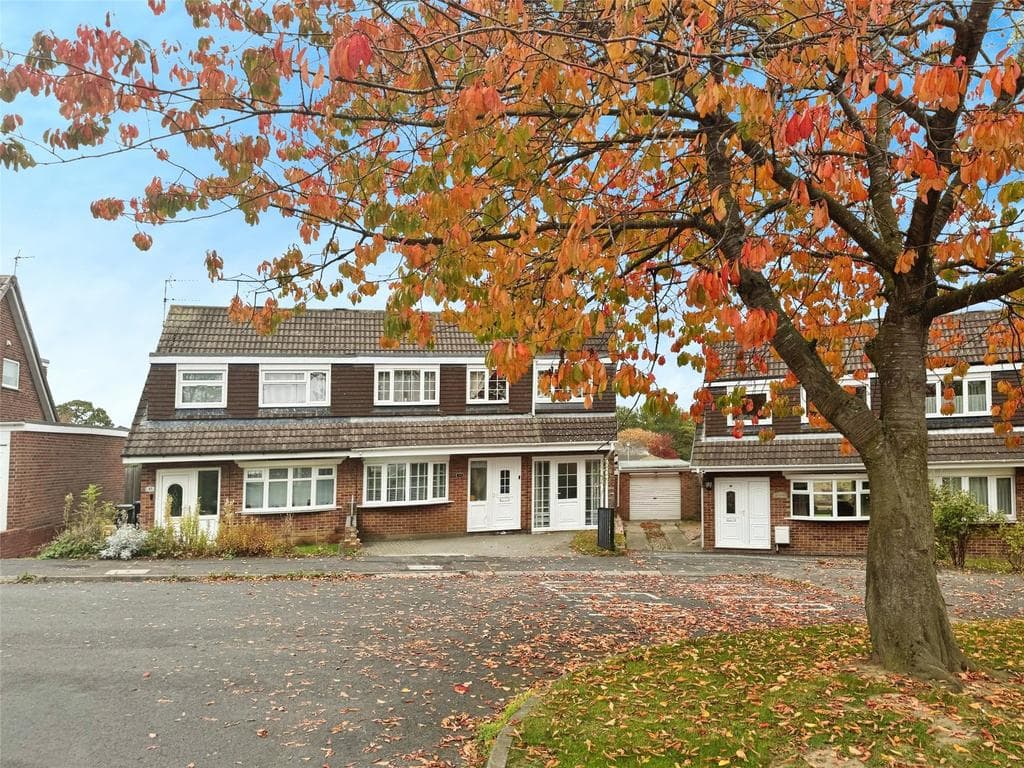
Nordic Spa House on a tree-lined street in Brandon

Brandon · County Durham

A village three miles from Durham cathedral.

Nordic Spa House is on Scripton Gill in Brandon — a quiet leafy street in a small County Durham village. Walk from the door past Brancepeth Castle. Drive ten minutes to Durham's cobbled streets and UNESCO cathedral. Half an hour takes you to the Durham Heritage Coast or the North Pennines.

Where we are

Quietly tucked between city and coast.

Five minutes from the A1(M) — close enough to arrive easily, far enough to disappear.

Here.Brandon,Co. DurhamN
5min
A1
10min
Durham
20min
Coast
25min
Newcastle
25min
Hamsterley Forest
2hr
Edinburgh

Our history

The story in the ground.

The place names around Nordic Spa House carry over a thousand years of history — Old English and Old Norse woven into the landscape by the farmers, settlers, and communities who shaped this corner of County Durham.

Gill

Old Norsegil

A deep, narrow ravine carved by a stream. A word found almost exclusively in the parts of Northern England where Norwegian and Danish settlers made their homes. Wherever you find a “gill” in a place name, you’re standing on ground once walked by Vikings. The word survives in North East dialect to this day.

Brandon

Old Englishbrōm-dūn

“The gorse-covered hill.” Once East Brandon, one of seven townships in the ancient Parish of Brancepeth — itself named for Brand’s Peth, the path of a man called Brandr (Old Norse for sword or fire). Held for centuries by the Neville Earls of Westmoreland. In the 1850s, coal transformed Brandon from a village of 500 people into a community of 14,000 in forty years. The collieries are long gone, but the name endures.

Scripton

Old Englishscipetūn

The oldest and most elusive element in our address — likely “sheep farm,” with the distinctive “sc” spelling reflecting Norse influence on local speech. If so, Scripton Gill simply means “the ravine by the sheep farm” — a name rooted in the pastoral landscape that existed here long before the coal seams were opened.

Durham

Old English dūn + Old Norse holmr

“The hill on the island.” The dramatic peninsula where Durham Cathedral still stands, wrapped by the River Wear. A hybrid word — Anglo-Saxon and Norse fused into one place name.

These names aren’t a celebration of conquest. They’re the quiet evidence of communities merging over generations — Norse settlers intermarrying with Anglo-Saxon families, farming the same hills, and leaving their language embedded in the ground beneath us. A thousand years later, you can still hear it.

Your stay

Book your retreat.

Book direct for our best rate — no booking fees, instant confirmation. Availability for July onwards is open now.

Book direct

Best rate, direct — no booking fees.

or book on